
What Europe Knows About Wildland Firefighter Visibility That the US Doesn’t (but should)
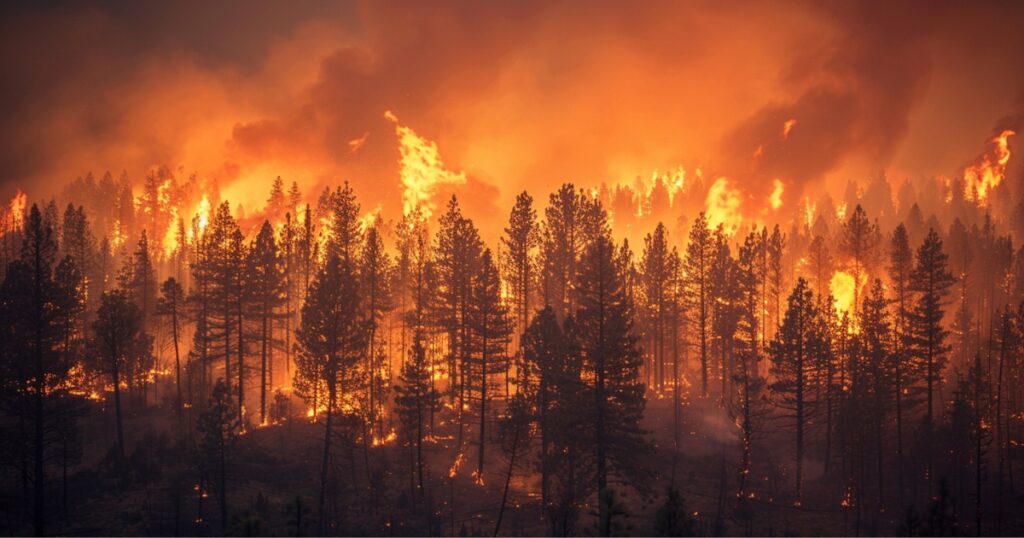
With record-breaking wildfire seasons driving unprecedented cross-border deployments, the gap between European and U.S. wildland firefighter visibility requirements has become a growing safety question.
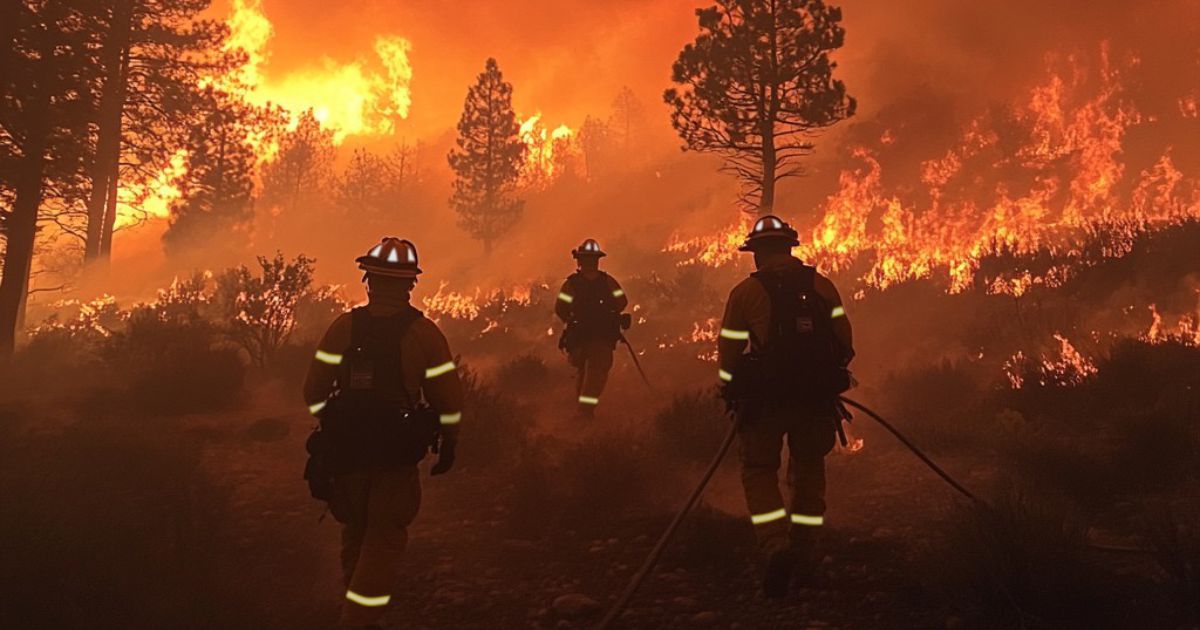
By early August 2026, at least ten firefighting personnel had died battling wildfires across Europe. The season is still in full swing. According to data from the European Forest Fire Information System, approximately 485,000 hectares had burned across the EU, the second-worst season in two decades of satellite monitoring. The worst was only last year.
The scale of wildland fire destruction on both sides of the Atlantic raises an interesting point. That is, when US and European crews are increasingly fighting the same fires, what happens when their gear isn’t certified to the same standards?
The short answer is, who knows? It hasn’t been formally tested. The longer answer is that the gap between how Europe and the US regulate wildland firefighter visibility is enough that it’s worth exploring in depth.
Two continents, two different approaches to HVSA regulation
The first blog in this series established that NFPA 1950, the US standard governing wildland firefighting PPE, treats retroreflective trim as optional. The language says “should determine the level of visibility required for work apparel based on the anticipated use,” leaving the final decision to local agencies. There is no national minimum reflective requirement for wildland gear.
EN ISO 15384:2020, the European and international standard governing the same gear category, takes a different position. Section 4.6 of the standard states that retroreflective and fluorescent material “shall be attached to the outermost surface of the personal protective clothing and shall give all-round visibility by having at least one band encircling the arms, legs and torso regions of the garment(s).“
Shall, not should. It’s not optional.
That single word represents a fundamentally different regulatory philosophy. In Europe, wildland firefighter visibility is a design requirement, but in the US it is more of a suggested best practice. At Interschutz, the German fire service expo that draws manufacturers and agencies from across Europe, virtually every wildland garment on display carries reflective trim with consistent placement across garment categories That is “shall” in practice. Compare that to US wildland gear, where reflective trim is common but not universal or mandatory, and the volume of reflective material is generally lower.
EU/US standards aren’t just different, they’re incompatible
EN ISO 15384 and NFPA 1977/1950 reach different conclusions about visibility requirements. They operate in entirely separate test method systems (ISO/EN versus ASTM) and use performance metrics that cannot be converted between the two. A garment certified to one standard cannot be assumed compliant with the other, because no mutual recognition agreement exists. Dual certification requires separate testing under each, independently. In practice, manufacturers supplying both markets typically develop separate garment designs for each standard rather than attempting to dual-certify a single product. This stems from the differences in how wildland firefighting is conducted in the US versus Europe.
Visibility requirements are no exception, so EN ISO 15384 requirements are built in. A garment with reflective trim certified under the European framework has been tested to specific retroreflective performance standards after laundering and ageing. A garment built to NFPA 1950, where reflective trim is optional in the first place, may carry no reflective materials and therefore no visibility performance verification whatsoever, a possibility the European standard doesn’t permit.
On material durability, EN ISO 15384 includes an abrasion resistance requirement that has no direct equivalent in NFPA 1977 or 1950. In practice, most high-quality retroreflective materials meet this threshold without a problem. At SRI Labs, we’ve tested products well beyond the required threshold without significant appearance change. The more important durability challenge is about retroreflective performance after repeated laundering.
SRI Labs’ wash testing, conducted under both ISP laundering and home wash protocols, demonstrates that not all reflective trim holds up equally over time. Testing of both sew-on Triple Trim and AIREX segmented trim against competitive products shows SRI maintaining stronger retroreflective performance through extended wash cycles. This is a practical durability advantage regardless of which set of standards the garment must meet.
The balance between heat protection and heat stress is what makes wildland gear design genuinely different from structural gear. ISO manages it through separate vapor resistance (Ret) and thermal resistance (Rct) limits, while NFPA requires a Total Heat Loss measurement of at least 500 W/m². Different frameworks for the same risk, with no validated conversion between them.
The practical implication for reflective trim manufacturers is straightforward: if you are building gear for both US and European markets, or building gear that may be deployed in either jurisdiction through mutual aid programs, you are running two separate certification programs. Specifying to one standard does not cover the other.
When US and European Crews Fight the Same Fire
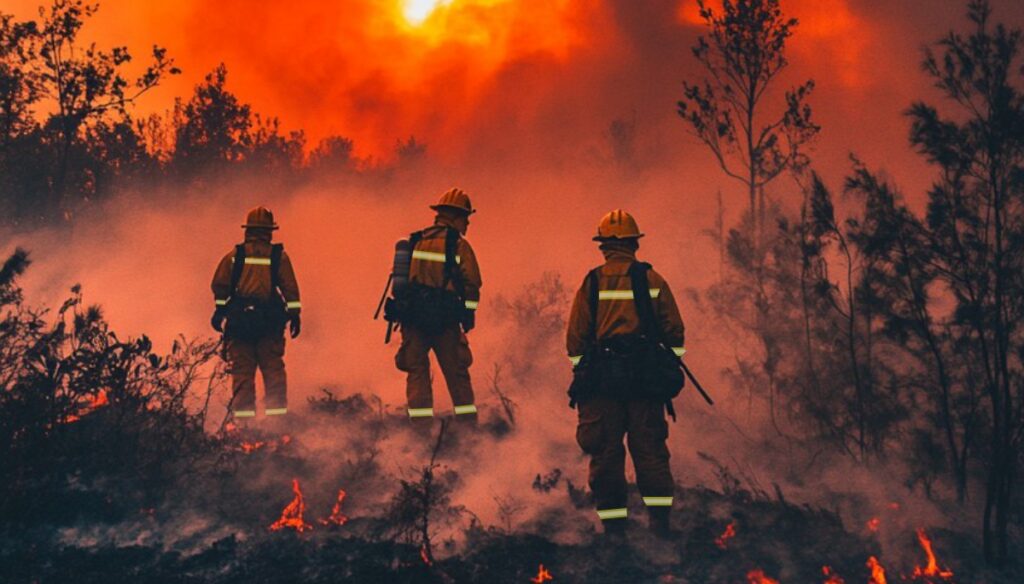
International wildland fire mutual aid is expanding. Within Europe, it is already routine: Spanish crews fought fires in Portugal in July 2026 even as Spain battled its own blazes and received help from neighboring countries. Several European firefighting teams were pre-positioned in France and Spain ahead of the 2026 season specifically to enable rapid cross-border response. The European Commission is actively pushing for a permanent pan-European firefighting force.
Across the Atlantic, more than 2,000 US wildland firefighters and support personnel deployed to Canadian incidents in 2026 alone under a mutual aid agreement that has been operational since 1982. Australian and New Zealand crews have worked US Pacific Northwest fires, which is important to note because AS/NZS 4824:2021, the Australian and New Zealand wildland firefighting clothing standard, directly adopts ISO 15384:2018 with modifications. That means Australian and New Zealand crews arriving to fight a US fire are wearing gear certified to the same ISO 15384 framework that mandates all-round visibility bands on arms, legs, and torso. Conversely, US crews working alongside them may have no reflective trim at all. It’s the same fire line, same hazards, but different gear. Another example of the compliance gap in action.
With more countries having severe fire years simultaneously, wildland firefighters are increasingly sharing resources across borders. “There’s more international cooperation happening, but it’s a double-edged sword because there’s more competition,” according to Cordy Tymstra, a wildfire scientist and consultant in Canada.
This raises an important gear compliance question: as fires that require international response grow larger and more frequent, and as the pressure to deploy crews across greater distances increases, what happens when their gear doesn’t meet the standard of the jurisdiction they’re working in?
Unfortunately this isn’t a hypothetical question. The regulatory gap between NFPA 1950 and EN ISO 15384 on visibility requirements is documented. So what happens if someday a US crew deploys to a European incident and arrives with gear that may not feature mandatory reflective trim in a jurisdiction where all-round visibility bands on arms, legs, and torso are a requirement? Nobody pulls crews off a fire line over a gear compliance question, but the time to address a safety gap is before it becomes an incident, not after.
What the US Can Learn From Europe’s Wildland Fire HVSA Standard
The revision of EN ISO 15384 is already underway. The draft standard, called ISO/DIS 15384, is in the enquiry phase with ISO members, meaning the already strong European wildland firefighter visibility framework is actively evolving.
What Europe got right in the current standard is the architecture. Mandatory placement requirements, “shall” language, and specific garment locations give manufacturers a clear design target. The requirement that retroreflective materials also meet Section 9.2 performance standards means the visibility requirement has trim durability performance built in, not just placement.
The US could adopt the same architecture without a complete regulatory overhaul. NFPA 1971 already mandates reflective trim for structural gear. The placement logic, the performance requirements, the “shall” language all exist in the US standards system already. Applying it to wildland gear under NFPA 1950 would be a logical progression, not a reinvention.
What manufacturers should do now
The standards revision cycle moves slowly. Wildland fires don’t.
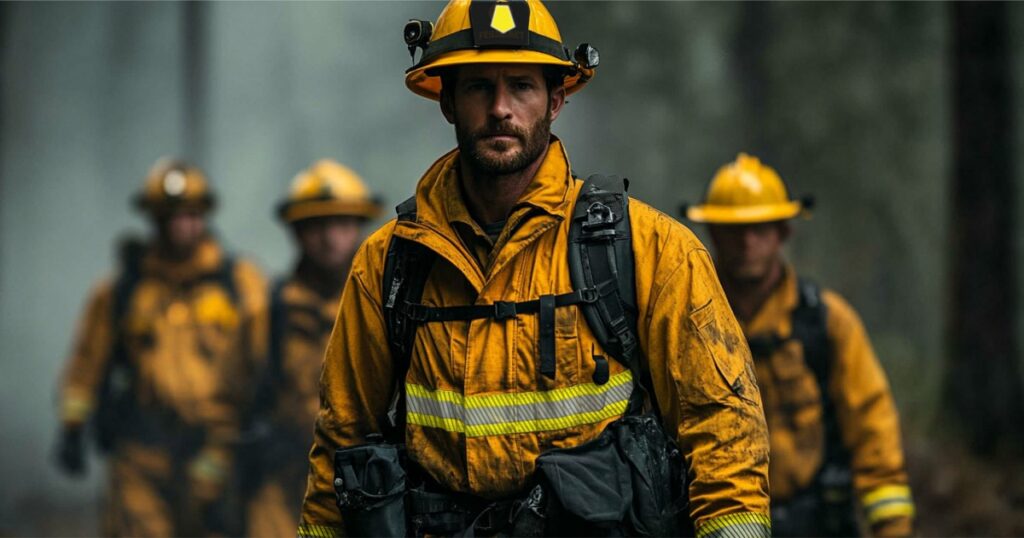
For safety apparel manufacturers building or specifying wildland firefighting gear today, the European framework offers a practical design reference regardless of which market you’re serving. The EN ISO 15384 Section 4.6 placement requirements, all-round visibility bands on arms, legs, and torso, represent the documented international consensus on what wildland firefighter visibility should look like. Designing to the EN ISO 15384 visibility specification now means your gear will already meet the requirements when US wildland fire standards catch up, rather than having to redesign after the fact.
For reflective components specifically, durability under real-world laundering conditions matters as much as initial certification. Both US and European standards require pre-treatment laundering before performance testing. The water temperature and cycle counts may be different, but the goal for both is to determine if the trim still performs after extended use. SRI Labs testing shows that the answer varies significantly by product. AIREX segmented trim and Triple Trim both demonstrate strong retroreflective performance retention through extended wash cycles, outperforming competitive products tested under the same conditions. Importantly, this advantage extends across both US and European laundering protocols.
AIREX, which bonds effectively to FR fabrics with or without PFAS and meets retroreflective performance requirements under ANSI/ISEA 107, ISO 20471, EN469, and NFPA 1970 (1971), is ideal for the heat and breathability demands of wildland firefighting. For manufacturers preparing for a cross-standard US/EU future, that makes AIREX a logical starting point.
The fire season that keeps making the case for reflective standards
The European wildfire season of 2026 is still burning as this is written, and the US season is running ahead of its five-year average. With international mutual aid deployments becoming more common, the regulatory gap between how Europe and the US approach wildland firefighter visibility is becoming harder to justify.
Since the international standard already exists, placement requirements are already written, and the material technology to meet them are available today, the question is when will the US framework catch up. And when it does, will the companies producing wildland firefighting gear now be ahead of the curve or racing to get up to speed?
Safe Reflections has been developing PFAS-free, FR-rated, segmented trim for demanding PPE applications on both sides of this regulatory gap, and building products that meet both frameworks without compromise since 2010.
Find Out How SRI Products Perform Across Both Standards
If you’re manufacturing wildland firefighting gear for US and international markets, bring your compliance questions to the SRI team, whether to discuss material selection for cross-standard applications, request samples of AIREX FR or IW trim, or run a pre-production compatibility evaluation through SRI Labs.
Recent Resources
What Europe Knows About Wildland Firefighter Visibility That the US Doesn’t (but should)
With record-breaking wildfire seasons driving unprecedented cross-border deployments, the gap between European and U.S. wildland firefighter visibility requirements has become a growing
The Visibility Gap: Why Wildland Firefighters Deserve More Than Optional
Wildland fires have become larger, more frequent, and increasingly likely to require nighttime operations, yet current U.S. wildland firefighting standards do not

The Future of Visibility: How Reflective Graphic Transfers Are Transforming Safety Apparel
Reflective graphic transfers represent a genuine step forward in how reflective materials can be applied, designed, and integrated into modern safety garments,