
The Future of Visibility: How Reflective Graphic Transfers Are Transforming Safety Apparel

The reflective safety industry has a tendency to frame innovation in terms of the technology itself. But technology is only useful to the extent that it solves a real problem in a real application.
Retroreflective trim has been the backbone of high-visibility safety apparel for decades for a simple reason: it works, and it saves lives. And for most of that time, the format has basically been the same. That is, strips of reflective material, sewn or bonded to a garment, doing its job until wear and tear, washing, or working conditions degrade them enough that replacement becomes necessary.
But, along with reflective trim, a growing segment of the safety apparel market is increasingly using laser-cut and other reflective graphic transfers.
Reflective graphic transfers represent a genuine step forward in how reflective materials can be applied, designed, and integrated into modern safety garments. The technology isn’t new, but its application to industrial and occupational PPE, particularly for programs with demanding laundering requirements, is producing outstanding results that are unique to this format.
Why Reflective Graphic Transfers Expand What Safety Apparel Can Do
Most of the attention in HVSA development goes to the reflective material itself: reflective brightness, certification compliance, durability through laundering. But the method by which a reflective material is applied to a garment is equally consequential, and it’s a variable that needs to be given equal weight in both design and procurement conversations.
Retroreflective trim is proven, and its track record in HVSA programs speaks for itself. But trim, by its nature, is a linear format – stripes, borders, and safety accents. It does that job exceptionally well. What it can’t do is carry a logo, reproduce a brand mark, or create the kind of intricate identifying graphic elements that imagewear, uniforms, and branded occupational programs increasingly require.
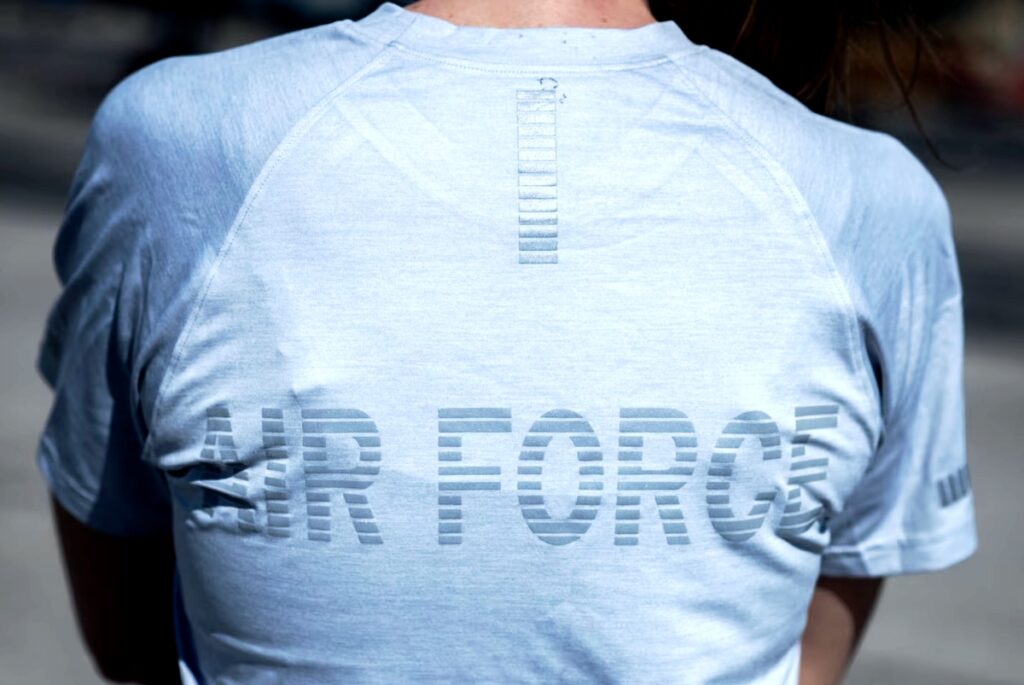
Reflective graphic transfers address that directly. Using the same time-proven, highly durable reflective materials found in SRI’s trim products, graphic transfers open up the full range of image, logo, identification, and personalization possibilities that trim formats simply weren’t designed for. The reflective performance is the same, but the design possibilities are wide open.
Critically, graphic transfers can also be produced with segmentation built in. These natural breaks in the reflective material improve durability and flexibility in larger reflective regions likely to bend and fold during wear and laundering. This delivers the same breathability and comfort advantages long associated with our AIREX® segmented trim, while still accommodating imagery, logos, and custom identification. It simply applies the technology in a new format.
What Safe Reflections XE Laser™ Actually Does Differently
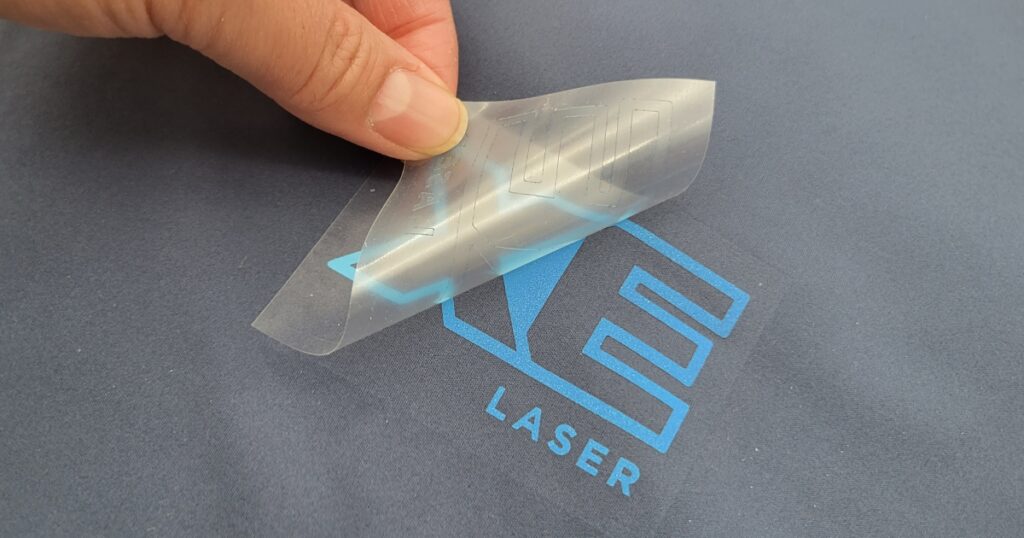
SRI’s XE Laser™ technology uses precision laser cutting to create clean, sharp-edged reflective transfers that bond directly to garment fabric using Tribondex™ adhesive systems. A description that, while technically accurate, undersells the underlying practical implications.
Reflective edge integrity is the first distinction. Conventional trim edges create a physical transition between reflective material and fabric. During hard worksite use, and under repeated industrial laundering with high temperatures, mechanical tumbling, and aggressive detergents, that transition point is constantly being tested. Laser cutting produces edges with a precision and consistency that reduces that vulnerability significantly. The cut is clean, the edge is defined, and the bond between material and fabric behaves very uniformly under stress.
The Tribondex™ adhesive system is the second distinction. The same adhesive technology engineered into SRI’s time-proven trim products is what bonds XE Laser graphic transfers to garment fabric. The same durability, the same compatibility across a wide range of fabric chemistries, and the same performance under the elevated temperatures and repeated mechanical stress of industrial laundering. That foundation doesn’t change just because the format does.
Design flexibility is the third distinction, and for imagewear, uniforms, and branded occupational programs, it may be the most important one. Laser cutting opens up complex shapes, brand elements, logos, and custom patterns that conventional trim formats simply weren’t designed to deliver, all while maintaining full ANSI/ISEA 107 and EN ISO 20471 compliance. Visibility and identity no longer have to be separate design considerations. Manufacturers and program managers can build both into the same reflective element, with consistent quality across production runs.
XE Laser’s breathable segmented configuration extends these benefits further, introducing natural breaks in the reflective material that allow air movement and garment flexibility without compromising edge integrity or retroreflective performance. For occupational programs where workers wear HVSA garments for extended shifts in physically demanding conditions, that combination of visibility, durability, and wearability matters. It’s compliance that workers will actually wear consistently.
The Industrial Wash and FR Industrial Wash Use Case
Reflective graphic transfers that meet the demands of industrial wash and FR industrial wash programs are not easy to find. The combination of laundering intensity, fabric chemistry, and compliance requirements narrows the field considerably. XE Laser meets both, using the same high-quality reflective materials as SRI’s proven trim products, but produced as virtually any graphic transfer shape, logo, or brand element a program requires.
Programs such as utility, logistics, manufacturing, construction, and public works put garments through commercial laundering at frequencies and intensities that standard certification testing doesn’t replicate. A garment washed two or three times per week in an industrial facility, with defined temperature and chemical protocols, accumulates stress at a rate that will expose durability shortfalls in materials that weren’t engineered for it. XE Laser Reflective’s industrial wash configuration is built for exactly this workload: retroreflective performance maintained over time, adhesion integrity preserved through repeated laundering cycles, and edge condition that doesn’t degrade into the fraying and separation that compromises both visibility and garment appearance.
Industrial FR wash programs add the requirement for flame resistance to the laundering challenge. FR garments are already complex from an engineering standpoint: the fabric chemistry, the treatment protocols, and the thermal response characteristics all affect how reflective materials perform over time. A trim construction that performs reliably on standard fabric may behave differently on an FR shell. XE Laser’s FR configuration is designed with this in mind, including flame resistance, certification to relevant compliance standards, and adhesive compatibility with the fabric systems it actually gets applied to, not just generic test substrates.
Compliance Without Compromise
One of the practical questions that comes up with any retroreflective format is whether performance gains come at the cost of compliance coverage. XE Laser meets ANSI/ISEA 107, EN ISO 20471, Berry, REACH, and NFPA standards, the full range relevant to the industrial, occupational, and public safety markets for which it’s meant. The value is that it delivers the compliance baseline and the performance above it in the same product, with no tradeoffs between design flexibility and wash durability.
Because buyers, safety managers, and designers who evaluate new materials can’t trade compliance for design flexibility or wash durability, the value of XE Laser is that it delivers not only the compliance baseline, but the performance above it in the same product.
The Safe Reflections Brilliant® Color platform extends these possibilities even further. While silver retroreflective is the standard for ANSI/ISO-rated HVSA applications, Brilliant® Color brings the highest brightness reflective material on the market to graphic transfers in more than 100 colors, including custom-matched brand colors. For programs where brand recognition, personalization, and maximum reflective brightness matter alongside visibility, it’s a capability that didn’t previously exist in industrial-wash-rated reflective transfers.
What This Means for Safety Apparel Designers and Program Managers
The practical benefits of laser reflective transfer technology show up differently depending on where you sit in the supply chain.
For garment manufacturers and designers, the format opens up new design territory beyond conventional trim. Brand integration, custom silhouettes, and complex reflective patterns are achievable without sacrificing the durability that industrial programs require. That’s a meaningful expansion that can translate directly into product differentiation in a market where competitive advantage is increasingly difficult to sustain.
For safety program managers and procurement teams, the relevant question is lifecycle performance under actual use conditions. A reflective element built for sustained performance through extended laundering reduces replacement frequency, simplifies program management, and sustains the visibility performance that the program was designed to deliver.
Pre-production compatibility testing through SRI Labs against actual garment fabrics and under realistic laundering conditions provides the data to make that evaluation with confidence before garments go into production.
For occupational safety professionals, the underlying question is always the same: are workers as visible as the program requires them to be throughout a garment’s service life? Laser reflective graphic transfer technology is engineered to meet that standard consistently, in the conditions where consistent, long-term visibility performance is what the program demands.
Innovation That Serves the Work
The reflective safety industry has a tendency to frame innovation in terms of the technology itself. But technology is only useful to the extent that it solves a real problem in a real application.
XE Laser reflective transfer addresses a well-documented gap: the difference between certification-level reflective performance and sustained field performance in programs with demanding laundering and wear conditions. The solution is a laser-cut transfer format with engineered adhesion, precise edge definition, and a design flexibility available in configurations specifically built for industrial wash and industrial FR wash applications.
It represents technology innovation that serves the work of keeping people visible – and safe- in environments where visibility is critical.
Talk to SRI About Your Industrial Wash Program
If you’re designing HVSA garments for industrial, occupational, or public safety applications, or managing a program where wash durability and sustained visibility are performance requirements, we invite you to take a closer look at the possibilities of XE Laser reflective transfer.
Bring your specific use conditions, fabric systems, and program requirements to the SRI team. We can discuss material selection, request samples, or run a pre-production compatibility evaluation through SRI Labs before production begins.
Find Out Which SRI Solution Is Right for Your Application
Bring your specific retroreflectivity use conditions to the SRI team, whether to discuss material selection and performance requirements, request samples, or run a pre-production compatibility evaluation through SRI Labs.
Recent Resources

What Europe Knows About Wildland Firefighter Visibility That the US Doesn’t (but should)
With record-breaking wildfire seasons driving unprecedented cross-border deployments, the gap between European and U.S. wildland firefighter visibility requirements has become a growing

The Visibility Gap: Why Wildland Firefighters Deserve More Than Optional
Wildland fires have become larger, more frequent, and increasingly likely to require nighttime operations, yet current U.S. wildland firefighting standards do not

The Future of Visibility: How Reflective Graphic Transfers Are Transforming Safety Apparel
Reflective graphic transfers represent a genuine step forward in how reflective materials can be applied, designed, and integrated into modern safety garments,