

Not All Reflective Materials Are Equal: How to Choose the Right Solution for Modern PPE
Retroreflective material selection is one of the most consequential HVSA decisions in a PPE program. Get it right and garments perform as intended from the day they’re issued through the end of their service life, which is protecting workers, meeting compliance requirements, and avoiding the cost and disruption of early replacement. The buyers, designers, and safety managers who treat material selection as a performance decision will get better safety outcomes than those who treat it as a line item.
What follows is a framework for making that decision well.
Why Reflective Material Selection Is One of the Highest-Leverage Decisions in a PPE Program
The gap between a compliant material and the optimal material for your needs isn’t always visible at the point of purchase. Both might carry the same certification and look identical on a spec sheet. The difference shows up later, after industrial laundering, heat exposure, and the garment has been in service long enough for the quality of the original decision to become apparent.
That gap has real safety consequences. An HVSA garment that degrades faster than expected creates replacement costs, compliance exposure, and in the worst cases, a worker who isn’t as visible as their program requires, or as they ideally should be. None of those outcomes are inevitable. They’re the predictable result of a selection process that prioritized price or other factors over performance.
A structured framework starts with a clear definition of what performance entails.
What Retroreflective Material Performance Actually Means: Ra, Durability, and Visibility Over Time
Performance for reflective materials has three dimensions, and all three have to hold up together.
The first is retroreflective output, measured as Ra. Ra is the standard measure of how well a material reflects light back toward its source, which could be a driver, an equipment operator, anyone whose recognition of a worker depends on that reflectivity. A minimum Ra of 330 cd/lx/m² is required for ANSI/ISEA 107 Class 2 certification. IW Trims rated to greater than 350 Ra exceed that threshold at delivery.
But what matters more than that starting value is the trajectory, and how quickly Ra degrades under real use conditions, and whether it degrades uniformly across the garment.
The second dimension is physical durability: adhesion integrity, edge condition, resistance to cracking and delamination, and how the material holds up under repeated mechanical stress. A material that maintains strong Ra values but begins to separate from the garment at the edges, or cracks at fold lines after moderate wear, has failed in a way that Ra measurement alone won’t capture.
The third is visibility as a “system.” A garment isn’t visible; the pattern it creates is visible. Drivers and equipment operators recognize workers by silhouette and outline, not by isolated bright spots or strips. Uneven degradation across an HVSA garment, trim that loses performance faster in high-wear areas than elsewhere, creates gaps in that pattern. Those gaps reduce recognition reliability in the environments where reliability is critical.
All three dimensions interact, and all three have to be evaluated together when choosing PPE.
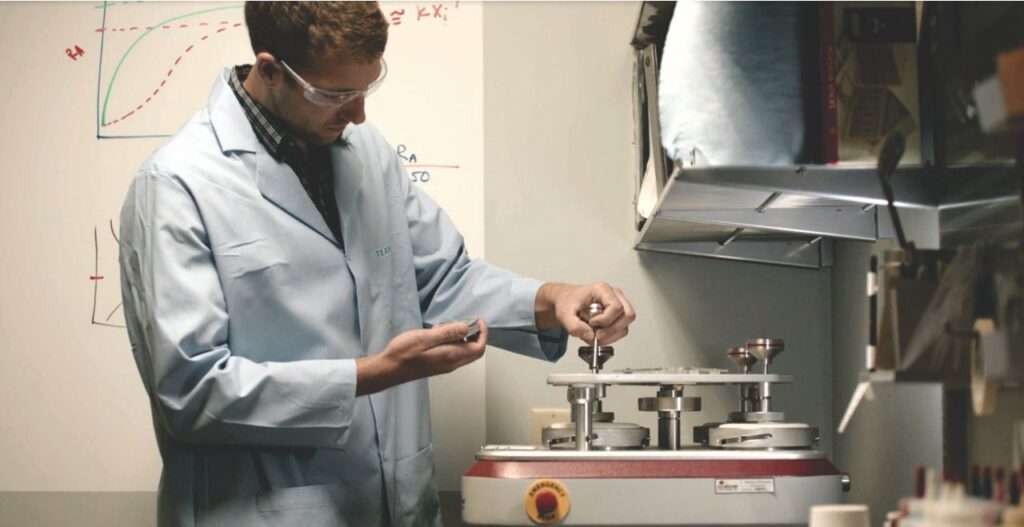
Material Selection: The Good, The Bad, and The…Right
As we’ve said in blogs and other materials before, certification – be it ANSI or anything else – establishes a quality floor for HVSA. What happens above that floor is determined by use conditions, and use conditions vary significantly across industries, applications, and even geographies.
Laundering frequency and method are often the most important variables. A garment washed once a week in an industrial laundry, with high temperatures, aggressive detergent chemistry, repeated mechanical tumbling, accumulates stress at a rate that home wash programs simply don’t. AIREX IW (and HW) configurations are specifically engineered to increase wash performance by two to three times compared to standard trim. Over a garment’s service life, that’s the difference between a retroreflective safety material that holds up and one that doesn’t.
Field conditions determine what else the garment faces beyond laundering. Fire service turnout gear faces radiant heat exposure that a delivery driver’s uniform hopefully never will. Utility workers in the field face UV degradation, chemical contamination, and abrasion against equipment. Each environment introduces stressors that accelerate specific failure modes, and the right HVSA material is the one engineered for the environment the garment actually works in. Not the one that passed a test under ideal controlled conditions.
Wear patterns and garment construction determine where mechanical stress concentrates. Trim at the waist of a high-movement garment flexes constantly. Trim on a shoulder seam experiences different stress than trim on a sleeve. Where stress concentrates is where failure begins, and that needs to be part of the material selection equation as well.
Fabric compatibility is the variable that gets either underestimated or overlooked most often. Trim that performs reliably on a standard polyester fabric may behave differently on a treated FR shell. The adhesive system, the lamination method, and the thermal response of the fabric all affect how trim performs over time. This isn’t a theoretical concern, it’s a documented failure mode that appears in production runs where materials were selected without adequate compatibility testing.
Lower-Quality Materials, Higher Failure Rates: The Failure Modes That Separate Engineered Materials From Commodity Trim
Reflective trim failures aren’t always random. They’re often predictable and follow recognizable patterns.
Retroreflectivity degradation that accelerates after industrial laundering is the most common. The retroreflective glass bead layer that produces Ra values is gradually worn away by repeated mechanical action, elevated temperatures, and aggressive detergent chemistry. Lower-quality materials hit the performance floor faster, and less uniformly, than materials engineered specifically for industrial laundering conditions.
Adhesion failures are often traced back to the aforementioned fabric compatibility issues. Hot-melt adhesive systems that weren’t designed for a specific fabric coating can fail before laundering ever becomes a factor. A DWR-treated fabric, for example, resists adhesive bonding the same way it resists water. The coating that protects the garment also prevents the trim from bonding properly.
Separately, adhesives that aren’t rated for high-temperature industrial laundering can partially re-melt under elevated dryer temperatures, weakening the bond between trim and garment over time. The failure may not appear immediately, but only surface after a handful of wash cycles by which point HVSA garments may already be in service.
Edge wear, cracking, and delamination under mechanical stress are the typical physical failure modes that accompany Ra degradation. Trim that cracks at fold lines, frays at edges, or begins to separate from the garment is failing in ways that affect both visibility and garment integrity. These failures tend to appear earlier and more severely in lower-quality materials, and they tend to cluster in the high-stress areas of a garment, which is exactly where visibility is most critical.
Systemic failures where the same failure mode appears across an entire production run, are the most costly outcome of poor material selection. They’re also the most avoidable, because the conditions that produce them are identifiable before production begins.
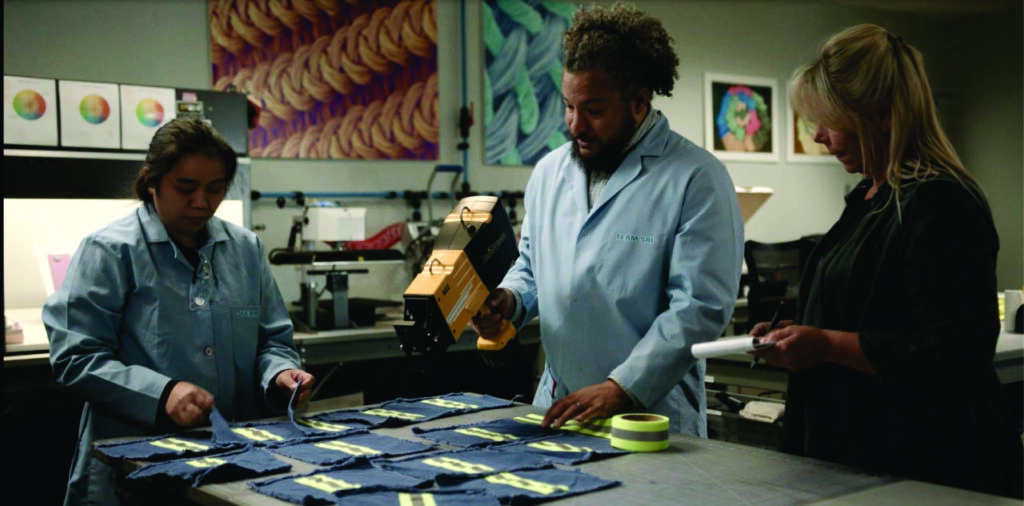
How SRI Labs Evaluates Reflective Material Performance for Real-World PPE Applications
So how does Safe Reflections avoid those all-too common issues? Testing. SRI Labs is the only in-house dedicated R&D, testing, and technology innovation center in the reflective industry. The work it does is specifically meant to bridge the longevity gap between regulatory certification and real-world field performance.
To that end, the methodology is grounded in real conditions. HVSA garments go through controlled industrial laundering simulations, with defined temperature, detergent chemistry, and cycle count, with Ra measured before and after each interval. Physical durability assessment covers adhesion integrity, segmentation behavior, and edge condition across the same cycles. Critically, testing is conducted against actual customer fabrics, not generic substitutes. That distinction matters because customer fabric compatibility issues don’t show up by testing on generic materials.
The output is highly practical comparative data. Specific – and actionable – data about how a certain material performs over time under the conditions it will actually face. Certification tells you whether a material passed. SRI Labs tells you how long that material will keep passing and under what conditions it will degrade. That distinction is what makes the data useful for actual material selection decisions, not just compliance documentation.
Perhaps the real practical value is in timing. When SRI Labs identifies a compatibility limit or a durability shortfall before production begins, the correction is straightforward. If that same issue surfaces after garments are in service, the correction can be a lot more expensive and disruptive, and more importantly the safety exposure in the meantime is real.
Matching the Right SRI Solution to the Right PPE Application
At SRI, we engineer solutions for specific use conditions because not every retroreflective product is right for every product line or application. What that means in practice is that the variables in the framework map directly to specific materials, each designed for the demands of the application it serves.
Triple Trim is designed for fire service and high-heat environments where both flame resistance and sustained retroreflective performance are required. It delivers silver retroreflectivity above 350 cd/lux-m2 combined with reflective fluorescent in Lime-Yellow and Red-Orange, in solid and segmented configurations. It’s built to maintain that performance through repeated industrial laundering. Not just at certification, but across the working life of the garment.
AIREX addresses applications where flexibility, comfort, and durability have to coexist. The patented segmented construction, the first of its kind, introduces natural breaks in the reflective material that allow it to move with the garment and the worker without the mechanical stress that causes solid trim to fail at fold lines and high-wear points. AIREX IW and HW versions increase wash performance by two to three times over standard trim, making it the right choice for programs with frequent industrial laundering and extended service life requirements.
Industrial Wash Trims are engineered for programs where high-volume commercial laundering is the primary stressor. Available in heat laminated film and sewn-on fabric configurations, in Lime-Yellow and Red-Orange, they’re rated to greater than 350 Ra and certified for the full range of industrial laundering compliance requirements. For delivery and logistics fleets, utility programs, and occupational safety applications where garments are laundered frequently and expected to perform consistently, IW Trims are built for exactly that workload.
A Better PPE Buying Decision Starts Before the Purchase Order
To sum up, the real material selection decision doesn’t happen at procurement. It happens earlier, at the design stage and during pre-production testing, before garments are manufactured and issued.
Pre-production compatibility testing identifies the issues that produce systemic failures before they become production problems. Lifecycle cost analysis reverses the economics of cheap HVSA material selection: a lower-cost material that requires replacement at eighteen months costs more over a program’s life than an engineered material that performs for thirty-six. And aligning safety managers, designers, and procurement teams on the same performance criteria, not just the same certification requirements, produces garments that meet the actual need, not just the minimum standard.
The question isn’t which material is cheapest. It’s which material is right for the job, and right for the conditions the job actually involves.
Find Out Which SRI Solution Is Right for Your Application
Bring your specific retroreflectivity use conditions to the SRI team, whether to discuss material selection and performance requirements, request samples, or run a pre-production compatibility evaluation through SRI Labs.
Recent Resources

What Europe Knows About Wildland Firefighter Visibility That the US Doesn’t (but should)
With record-breaking wildfire seasons driving unprecedented cross-border deployments, the gap between European and U.S. wildland firefighter visibility requirements has become a growing
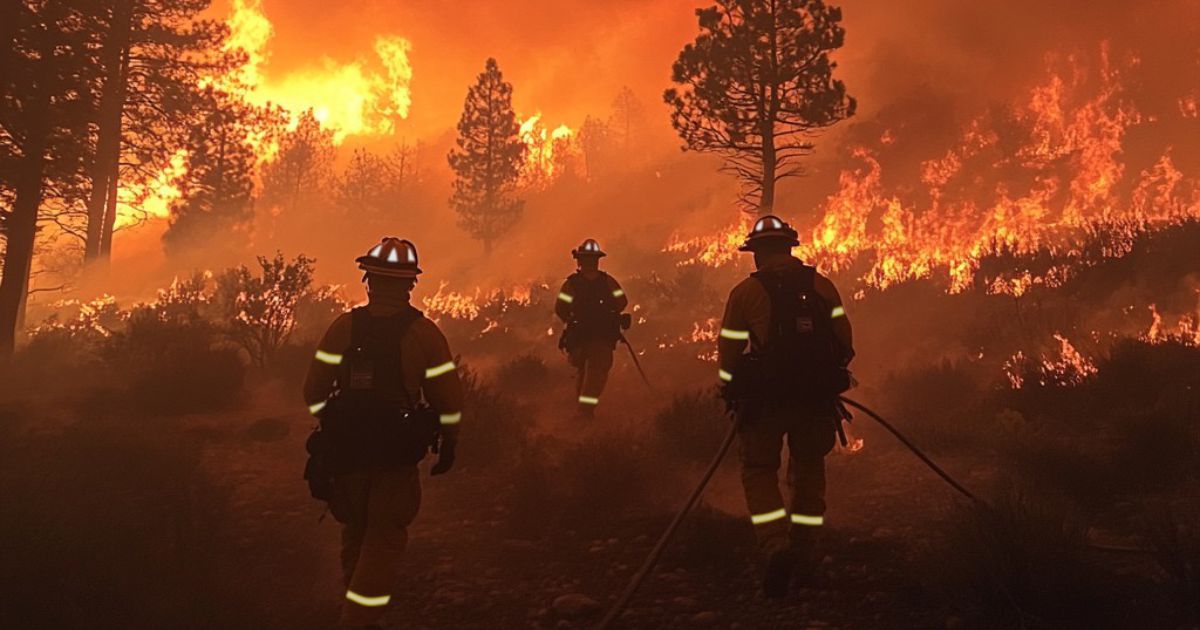
The Visibility Gap: Why Wildland Firefighters Deserve More Than Optional
Wildland fires have become larger, more frequent, and increasingly likely to require nighttime operations, yet current U.S. wildland firefighting standards do not

The Future of Visibility: How Reflective Graphic Transfers Are Transforming Safety Apparel
Reflective graphic transfers represent a genuine step forward in how reflective materials can be applied, designed, and integrated into modern safety garments,