
ANSI in Action: Where HVSA Compliance on Paper Becomes Performance in the Field
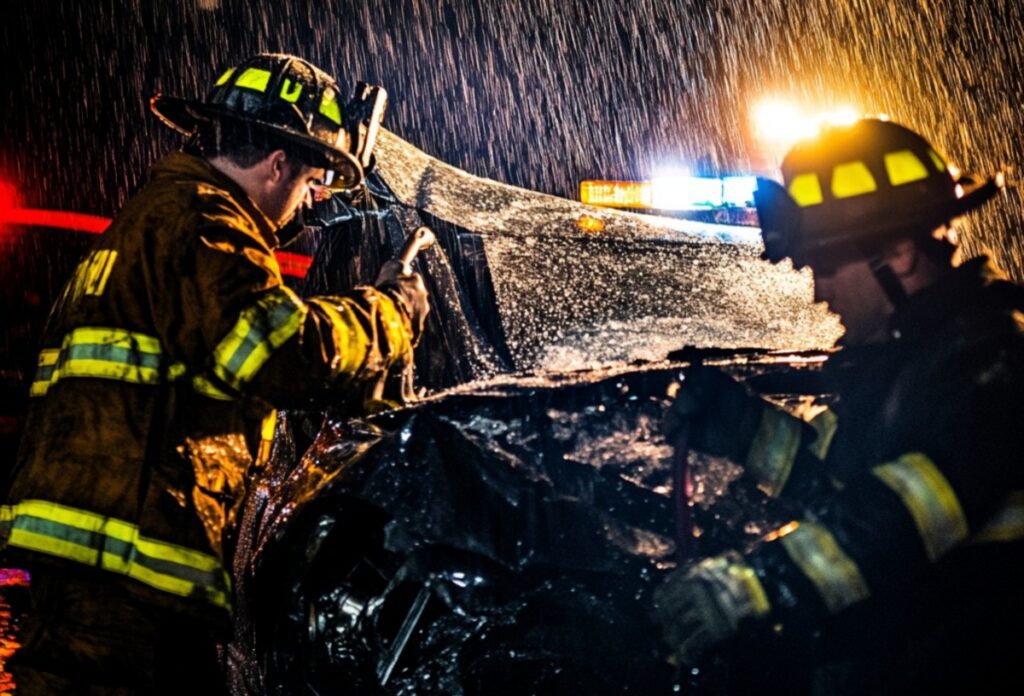
ANSI compliance gets your HVSA garment certified. But what keeps it performing after months of heat, laundering, and real-world wear?
There’s a question that keeps coming up at fire and safety tradeshows. Not about which standard applies, or whether an High-Visibility Safety Apparel(HVSA) garment is certified. Those things are assumed. The question is more direct: how long does it stay that way?
That’s the conversation at FIERO and FDIC this year. Not compliance, but durability. And for retroreflective trim, the distinction matters more than most certification processes are built to address.
Why ANSI Compliance Alone Doesn’t Guarantee HVSA Performance in the Field
ANSI standards for HVSA garments exist for good reason. They set minimum performance requirements, establish a common benchmark for manufacturers, and give buyers a baseline for evaluation. That work is essential.
But standards are tested under controlled conditions. A garment arrives at the test facility clean, new, and undamaged. If it performs, it passes and a certification is issued. But then it has to go to work.
In practice, that means:
- Industrial, commercial-grade laundering with high temperatures, aggressive detergents, and mechanical tumbling repeated fifty to a hundred times over a garment’s service life.
- Radiant heat and/or direct sunlight as a garment sits in a parked vehicle.
- Getting close enough to a structural fire that the thermal load on a garment measures in kilowatts per square meter.
- Abrasion against equipment, contamination that doesn’t wash clean, and physical stress from movement and wear that no lab test fully replicates.
All these things are mortal enemies of retroreflective trim, and at some point the question of whether a garment still meets the standard for which it was certified becomes a real consequence. That gap between “certified” performance and “actual” performance is where safety risks actually thrive.
What Fire and Safety Professionals Are Really Asking About Retroreflective Performance
The central concern is retroreflective performance — how well trim continues to reflect light back toward a driver or equipment operator after repeated laundering and field exposure. Retroreflectivity is measured as RA, and over time RA degrades. That’s not a defect, it’s just the way physics works. The practical question is how fast it happens, and whether it degrades uniformly across the garment.
Uneven degradation is the specific failure mode getting attention. Trim that loses performance faster in certain areas creates gaps in the visibility pattern. That matters because visual recognition — the kind that actually prevents incidents and accidents — isn’t about isolated bright spots. Drivers and equipment operators process patterns because that’s how the human brain operates. That pattern could be a firefighter’s silhouette, or a road worker’s outline, even in very low light conditions. When sections of that pattern fail before others, the recognition becomes unreliable. Is it a person or not? And that happens in exactly the environments where it needs to be most dependable.
There’s also an accountability question emerging. Safety managers and procurement teams are aware that a garment certified at delivery may not be performing to that standard a year into service. They’re asking who’s responsible for knowing the difference.

How Industrial Laundering, Heat, and Wear Degrade Reflective Trim on FR Garments
Most reflective trim failures aren’t random — they’re the predictable results of specific interactions between materials, heat, chemistry, and mechanical stress that accumulate over time.
Industrial laundering is harder on materials than most certification testing accounts for. High chemical concentrations, elevated temperatures, and repeated mechanical action gradually wear away the retroreflective glass bead layer that produces RA values. In some cases, adhesion weaknesses that weren’t visible during inspection only surface after a handful of wash cycles. In others, trim passes dozens of cycles before performance drops off sharply. The timing varies, but the direction doesn’t.
Heat adds its own layer of stress. In fire environments — which SRI Labs has tested directly, including full-scale PyroMan exposure testing at North Carolina State University — radiant heat exposure at fire-adjacent intensities does more than just degrade retroreflective performance. It can reveal material incompatibilities that were present from the start but invisible under standard conditions. Hotmelt adhesive systems, when re-exposed to elevated dryer temperatures during laundering, can partially re-melt, weakening the bond between trim and fabric. Edge wear and cracking in the retroreflective layer follow. Lower-quality materials hit these failure points earlier and less uniformly.
There’s also a systems issue that gets underappreciated. Flame Resistant(FR) garments and retroreflective trim are often evaluated independently — fabric for flame resistance, trim for reflectivity. But they’re worn together, laundered together, and stressed together. A trim construction that performs reliably on standard fabric may behave differently on an FR shell that responds to heat and mechanical stress in its own way. The interaction between materials is part of the performance equation, and it has to be tested as such.
How SRI Labs Tests Reflective Trim Performance Beyond ANSI Certification Standards
SRI Labs is the only in-house dedicated testing and R&D center in the reflective industry. The work it does sits specifically in the space between certification and field performance.
Our methodology is grounded in real conditions, not theoretical ones. Garments go through repeated industrial laundering simulations — with defined temperature, chemistry, and cycle count — while RA is measured before and after each defined interval. Physical durability assessment covers adhesion integrity, segmentation behavior, and edge condition. When trim is tested against actual customer fabrics under realistic lamination and laundering conditions, the results often tell a different story than the certification alone.
The output isn’t a pass or fail determination — it’s usable data. Specific, comparative data about how a material performs over time under the conditions it will actually face. Certifications like ANSI and others establish a starting point. Our kind of testing demonstrates the true reflective trajectory.
That makes the value much more than just diagnostic. When SRI Labs evaluates trim against real FR fabrics under realistic thermal and laundering conditions, it identifies compatibility limits before garments go into production, not after they fail in the field.
There’s a lot in that difference that matters. Reactive correction after a safety exposure is far more costly, in every sense of the word, than prevention.
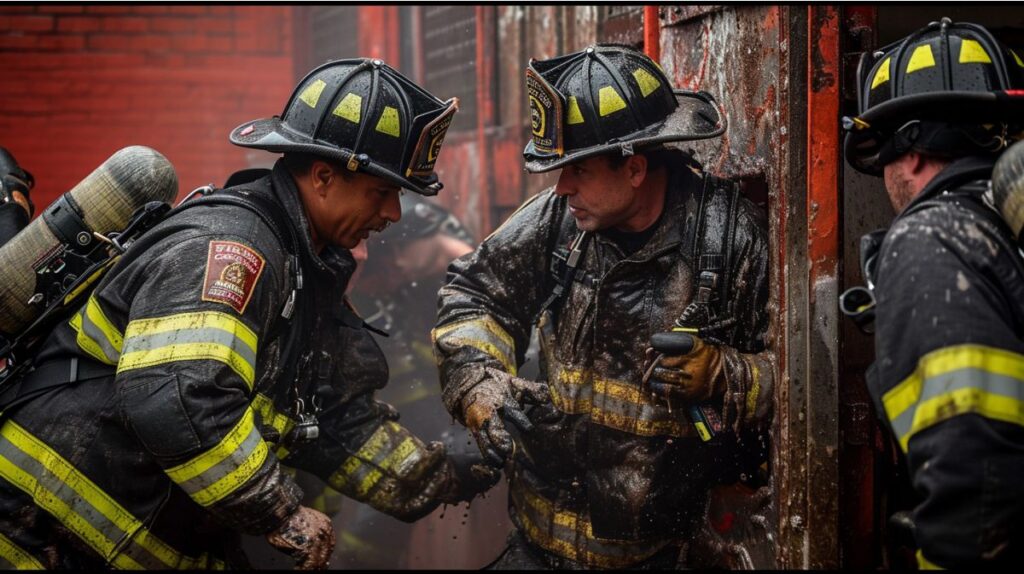
Selecting FR Garment Materials and Reflective Trim Based on Real-World Use Conditions
The implication for material selection for HVSA garments is straightforward: certification is the minimum, and beyond that it’s all about the actual use conditions. That is what determines which materials to choose based on which are engineered to hold up longest and perform best.
- Laundering frequency matters: a garment washed twice a week in an industrial facility accumulates more stress faster than one washed monthly.
- Application environment matters: fire service turnout gear faces thermal loading that an occupational road crew garment never will.
- Wear patterns matter: some positions and roles put consistent mechanical stress on trim in ways that accelerate failure modes that would otherwise take longer to appear.
At SRI, we developed Triple Trim with this in mind. It delivers high-brightness silver retroreflectivity above 350 RA, combined with fluorescent visibility in both Lime-Yellow and Red-Orange. It’s built to be flame resistant and durable through repeated industrial laundering, and engineered to maintain performance over the service life of the garment. In environments where firefighters don’t know what conditions they’ll face when they answer a call, that consistency is the point.
AIREX addresses a different aspect of the same problem. The patented segmented construction introduces natural breaks in the reflective material that allow for movement and flexibility without the mechanical stress of fold lines and high-wear points that are often the cause of solid trim failures. In demanding applications where garments flex repeatedly under all conditions, that construction handles the combined stress differently than solid trim.
Long-Term Reflective Safety Performance: Beyond the Certification Date
Regulatory compliance will always be a requirement, as it should. But the frame around it is changing.
A garment certified today might be in service for years. The conditions it works in will test it in ways the certification process can’t fully replicate. The people responsible for worker safety — safety managers, designers, and procurement teams — are holding materials to a higher standard: not just what a garment is certified to do, but what it continues to do after it’s been worn, washed, and exposed to the environments it was built for.
That’s a reasonable ask. Meeting safety standards at delivery is table stakes. Maintaining that performance across a garment’s working life is where safety lives.
Put Your FR and Reflective Materials to the Real-World Test
Certification tells you where your materials start. SRI Labs tells you where they go.
Talk to our team about your specific FR and reflective performance challenges, validate retroreflective trim durability through SRI Labs testing, or find out whether AIREX, Triple Trim, or our FR solutions are the right fit for your actual use conditions.
Recent Resources
What Europe Knows About Wildland Firefighter Visibility That the US Doesn’t (but should)
With record-breaking wildfire seasons driving unprecedented cross-border deployments, the gap between European and U.S. wildland firefighter visibility requirements has become a growing
The Visibility Gap: Why Wildland Firefighters Deserve More Than Optional
Wildland fires have become larger, more frequent, and increasingly likely to require nighttime operations, yet current U.S. wildland firefighting standards do not

The Future of Visibility: How Reflective Graphic Transfers Are Transforming Safety Apparel
Reflective graphic transfers represent a genuine step forward in how reflective materials can be applied, designed, and integrated into modern safety garments,