
Fire Doesn’t Wait: What PyroMan Testing Reveals About Reflective Trim Under Extreme Heat
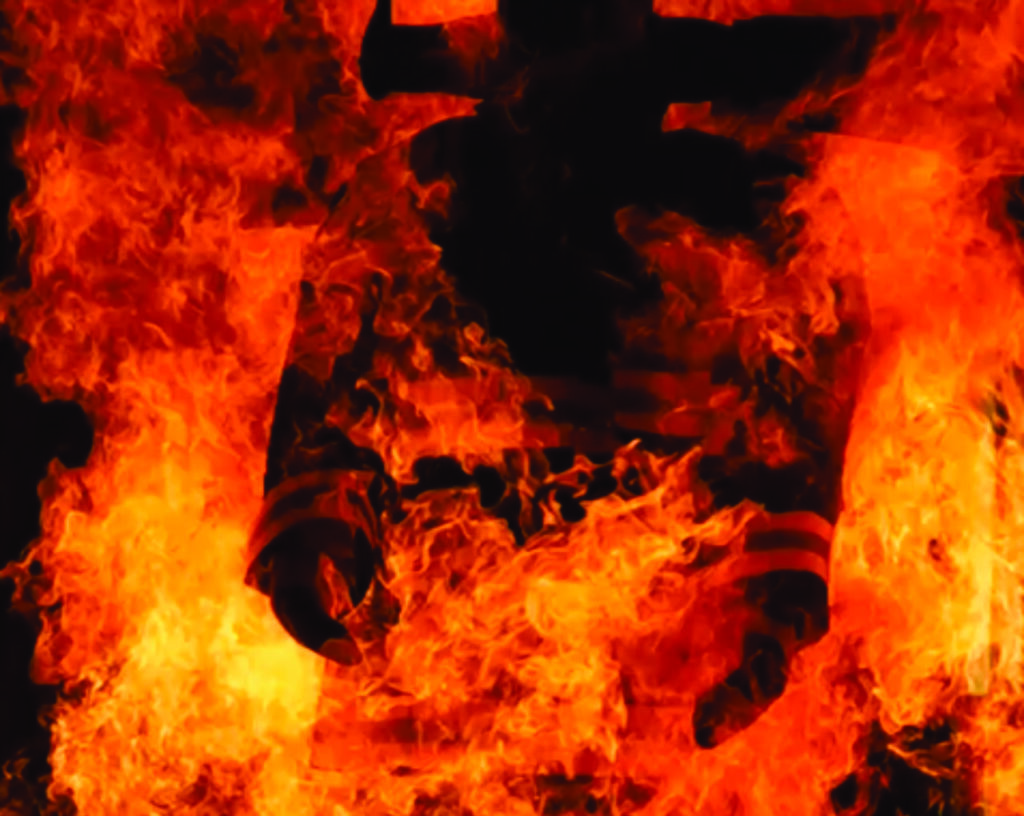
In environments defined by heat, chaos, and compromised sightlines, the performance of reflective trim becomes a critical factor in firefighter survival.
In fire service environments, high-visibility elements are not decorative, and they are not evaluated only for initial regulatory compliance. Reflective trim supports identification, orientation, and situational awareness during some of the most demanding conditions imaginable, often during and after exposure to extreme heat.
That distinction matters. Traditional high-visibility safety apparel (HVSA) assumptions do not fully apply once flame exposure, radiant heat, and thermal shock enter the picture. For firefighters, reflective trim must remain usable when conditions are degraded, visibility is compromised, and lives are on the line.
At Safe Reflections, Inc., these challenges are examined through SRI Labs, where reflective trim performance is evaluated not only against published requirements, but also against realistic use conditions. One of the most demanding of those evaluations involves full-scale fire exposure testing using PyroMan at North Carolina State University.
This article explores what that testing reveals about reflective trim performance under extreme heat, why post-exposure visibility matters, and how advanced testing helps fire service stakeholders make better-informed decisions.
Fire changes the rules for reflective performance
Firefighter visibility cannot be evaluated like standard HVSA, because fire service PPE operates in a fundamentally different risk environment.
While visibility remains critical, reflective trim in fire applications must contend with conditions that most workwear never encounters: intense radiant heat, open flame exposure, uneven thermal loading, and rapid temperature changes.
In these environments, reflective trim supports more than residual visibility. It plays a role in personnel identification, team awareness, and accountability during suppression, overhaul, rescue, and post-incident operations. Performance expectations extend beyond “meets the spec sheet” to questions like: Is it still visible? Is it still recognizable? Does it still support identification after exposure?
Those questions cannot be answered fully through standard testing alone.
Why post-exposure visibility matters in fire environments
Reflective trim does not stop mattering when the flames are put out. It needs to remain visible afterward.
Firefighters rely on reflective elements during overhaul, secondary searches, and post-incident operations for recognition, orientation, and team awareness, often in low-visibility environments filled with smoke, steam, or debris. In these moments, clear identification and orientation can directly affect safety and coordination.
Loss of reflectivity or trim integrity following heat exposure can introduce uncertainty at precisely the wrong time. That is why post-exposure visibility, how reflective trim appears and functions after heat exposure, is a critical performance consideration in fire service PPE.
Beyond conventional testing: Evaluating reflective trim under fire exposure
When the heat is on, standard lab tests don’t tell the full story. Traditional adhesion, wash durability, and reflectivity testing remain essential foundations for evaluating reflective trim. These methods establish baseline performance and help ensure consistency under controlled conditions.
However, fire service environments introduce variables that conventional testing was never designed to simulate. Rapid heat flux, localized flame exposure, uneven thermal loading, and complex material interactions can all influence reflective trim behavior in ways that do not appear in pass/fail laboratory results.
In fire applications, the critical question is not simply whether reflective trim meets initial requirements, but how it behaves after exposure. Does visibility remain usable? Is trim integrity maintained? Can firefighters still be clearly identified when conditions are degraded?
Answering those questions requires evaluation methods that extend beyond standard laboratory testing and account for the realities of fire exposure.
Full-scale fire exposure testing with PyroMan
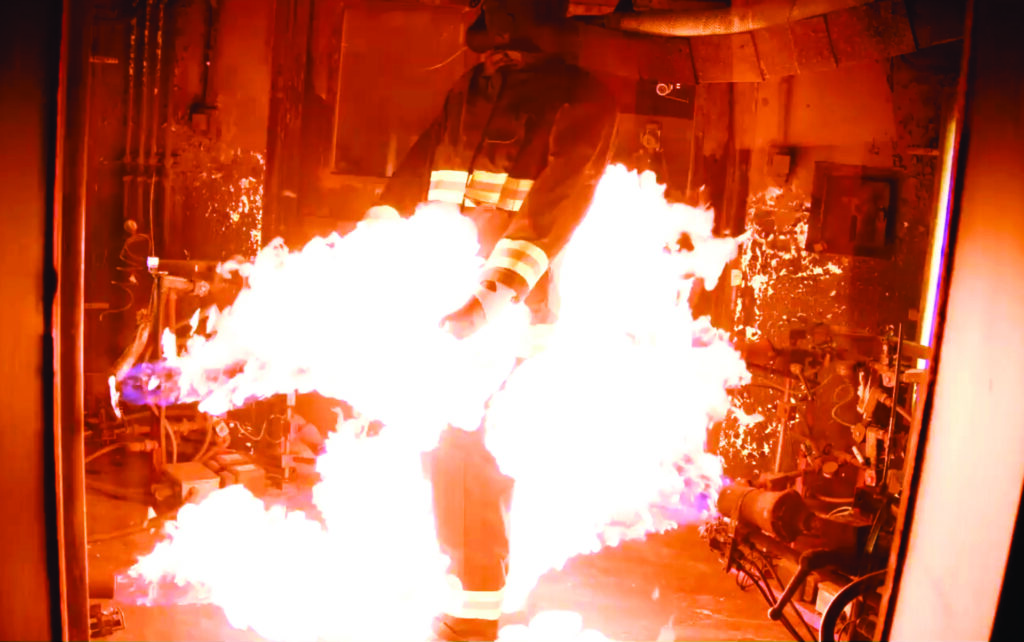
To better understand reflective trim behavior under realistic fire conditions – performance after exposure, not just if and how the trim survives – SRI Labs conducted full-scale fire exposure testing using a PyroMan manikin at North Carolina State University.
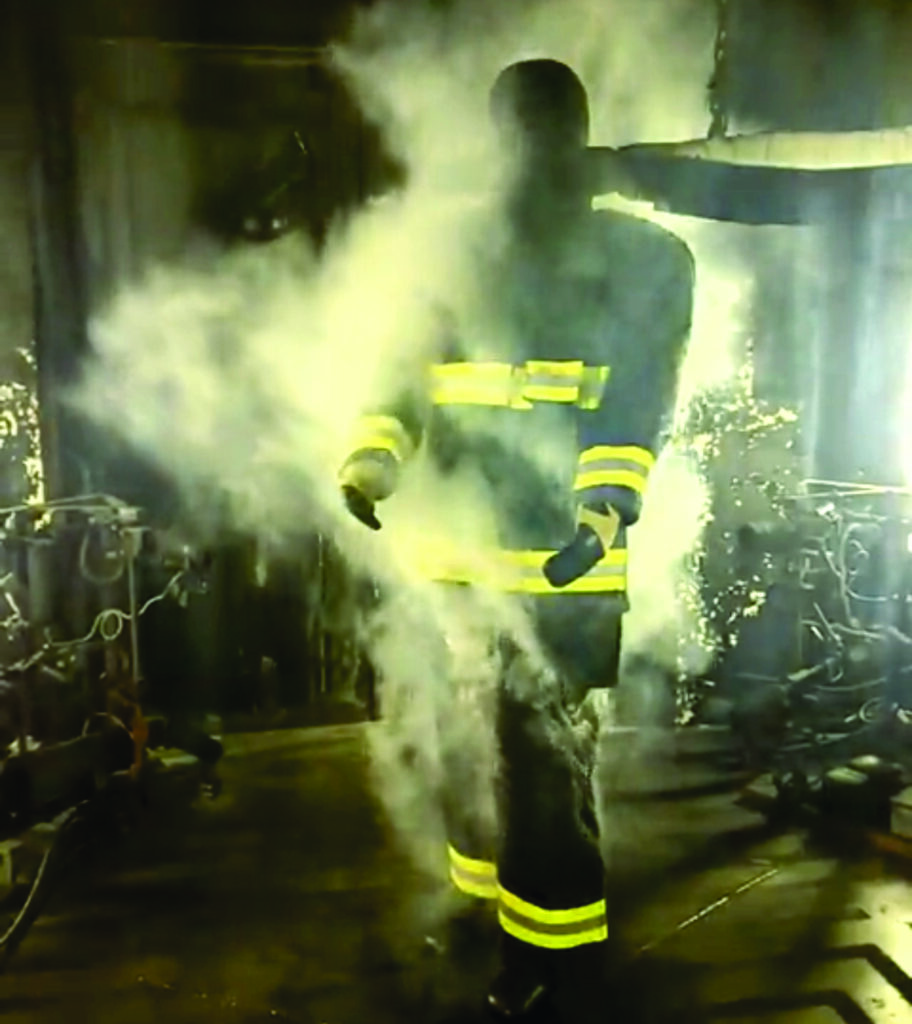
PyroMan testing exposes a full-size, instrumented manikin to controlled flame sources while distributed heat sensors record thermal exposure across the body. This approach allows reflective trim to be evaluated under conditions that more closely resemble real fire scenarios, rather than isolated or theoretical heat events.
Importantly, the focus of this testing is not to replicate a single incident or to establish a pass/fail threshold. The intent is diagnostic: to observe how different reflective trim constructions respond to realistic thermal stress, and how that response affects post-exposure visibility and integrity.
Visual documentation, captured through still imagery and video before and after exposure, plays a critical role in this evaluation. Seeing how reflective trim appears following heat exposure often provides insight that numerical values alone cannot convey.
By combining thermal data with post-exposure observation, PyroMan testing helps SRI Labs understand compatibility limits, performance trends, and design factors that influence reflective visibility in fire service environments. The emphasis is not on survival alone, but on whether reflective trim continues to support identification and situational awareness after exposure.
Key insights from PyroMan-based evaluations
Fire exposure testing revealed that differences in reflective trim construction can lead to observable differences in post-exposure visibility and integrity. Small differences, meaningful outcomes.
In many cases, these differences were incremental rather than dramatic. However, in fire service environments, incremental improvements matter. When conditions are already extreme, small gains in post-exposure visibility can support better identification and situational awareness.
Bench-Level Thermal Performance Testing
Full-scale Pyroman exposure testing is supported by disciplined bench-level thermal evaluation to establish controlled performance baselines. Two primary thermal tests were conducted: Radiant Protective Performance (RPP) and Cylindrical Thermal Protective Performance (CTPP).
Radiant Protective Performance (RPP)
In the RPP test, a composite specimen consisting of:
- Reflective trim
- Outer shell fabric
- Moisture barrier
- Thermal barrier
Trim is exposed to radiant heat from infrared lamps at 12 kW/m² for a defined duration. This energy level is comparable to standing in close proximity to a structural fire. Without protective gear, exposure at this level could cause extreme pain and second-degree burns within approximately 10–20 seconds.
The purpose of this test is to evaluate how the composite system manages radiant heat transfer and how reflective trim behaves when subjected to sustained radiant exposure.
Cylindrical Thermal Protective Performance (CTPP)
The CTPP test evaluates performance under more intense, combined heat exposure conditions. In this test, the composite specimen is wrapped around a cylindrical mandrel and exposed to 84 kW/m², representing flash fire or emergency fireground conditions.
Thermal exposure includes both:
- Convective heat from angled natural-gas burners
- Radiant heat from infrared lamps positioned below the specimen
This configuration introduces complex heat flux and curvature stress representative of realistic fireground exposure.
Post-exposure evaluation
Following both RPP and CTPP exposure, specimens were evaluated for:
- Retroreflectivity retention
- Color change
- Fluorescence degradation
- Exposure durations were varied to determine:
- When visual and reflective properties begin to degrade
- When degradation reaches a functional threshold
In controlled comparisons, SRI reflective products demonstrated longer retention of retroreflective performance and delayed visible degradation under applied heat exposure. These observations help contextualize how bench-level performance characteristics translate into real-world thermal environments.
Visual comparison: CTPP results
The CTPP evaluation produced the more visually dramatic results.
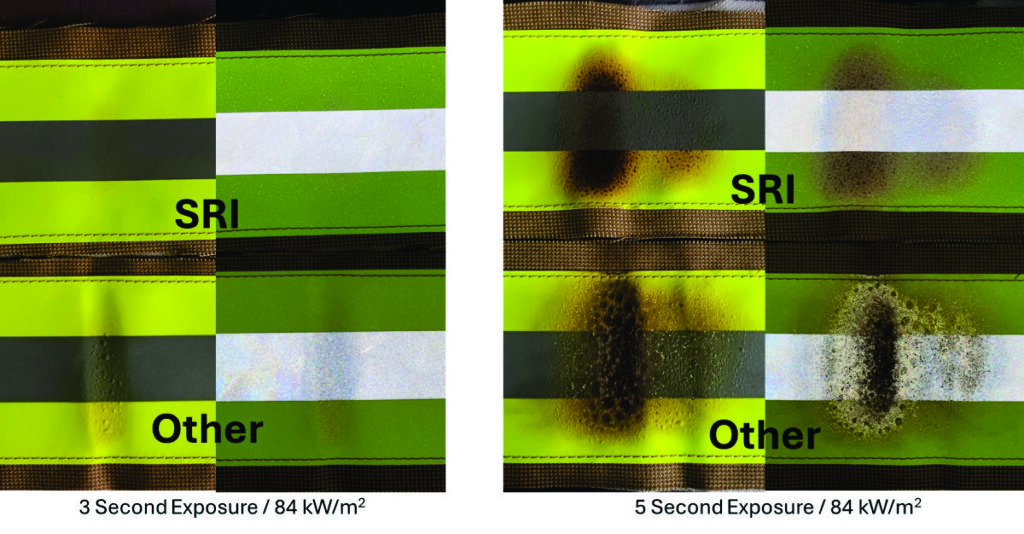
Caption: Post-CTPP exposure specimens. Left: natural light. Right: flash photography illustrating retained retroreflective performance. Damage patterns aligned for comparison.
Natural-light images show surface damage and discoloration patterns. Flash photography illustrates retained retroreflective response after thermal exposure.
Together, these images help illustrate how reflective trim behaves visually after extreme heat stress.
Importantly, these insights were developed without naming competitors or positioning results as absolute. The value lies in understanding behavior and trends, not in declaring categorical outcomes.
Why this kind of testing builds confidence for fire service stakeholders
For firefighters, specifiers, and safety leaders, visual evidence matters. Seeing performance builds trust
Knowing how reflective trim appears after heat exposure—how much visibility remains, how clearly elements can still be identified—often provides greater confidence than numerical values alone. Full-scale testing helps bridge the gap between laboratory data and field expectations.
In fire environments, reflectivity that lasts even a few seconds longer can make a meaningful difference. Those seconds can support orientation, recognition, and decision-making when visibility is compromised and conditions are rapidly changing. In situations where firefighters must see their way safe, incremental improvements in post-exposure visibility matter.
This is why full-scale, visual testing resonates so strongly with fire service stakeholders. It connects technical evaluation to real-world performance in moments when outcomes are determined quickly and margins are narrow.
How fire testing fits into SRI Labs’ broader approach
Fire exposure testing, like PyroMan, is an extension of SRI Labs’ broader methodology. Across applications, the lab focuses on understanding how materials behave within complete systems and under realistic conditions.
The same disciplined approach used to diagnose fabric compatibility, adhesion performance, and laundering durability in other HVSA applications is applied here, adapted to the most demanding environment of all.
By connecting diagnostics to decision support, SRI Labs helps reduce uncertainty and support predictable performance outcomes.
When conditions are extreme, testing must be too
Fire service environments demand validation beyond minimum requirements. For organizations developing, specifying, or evaluating firefighter PPE, engaging early with advanced testing helps clarify performance expectations and reduce risk.
Reflective trim that performs predictably after exposure supports identification, situational awareness, and safety when it matters most: helping firefighters see their way safe in environments where visibility cannot be taken for granted.
Let’s continue the conversation at FIERO – Booth 15
Or contact us to discuss SRI Labs fire testing approach, and learn how reflective trim performance is evaluated following extreme heat exposure.
Recent Resources
Designing Visibility: How Segmented Reflective Trim is Reshaping High – Visibility Apparel
When retroreflective trim moves with the garment
—
and the worker
—
it becomes part of the garment’s<br
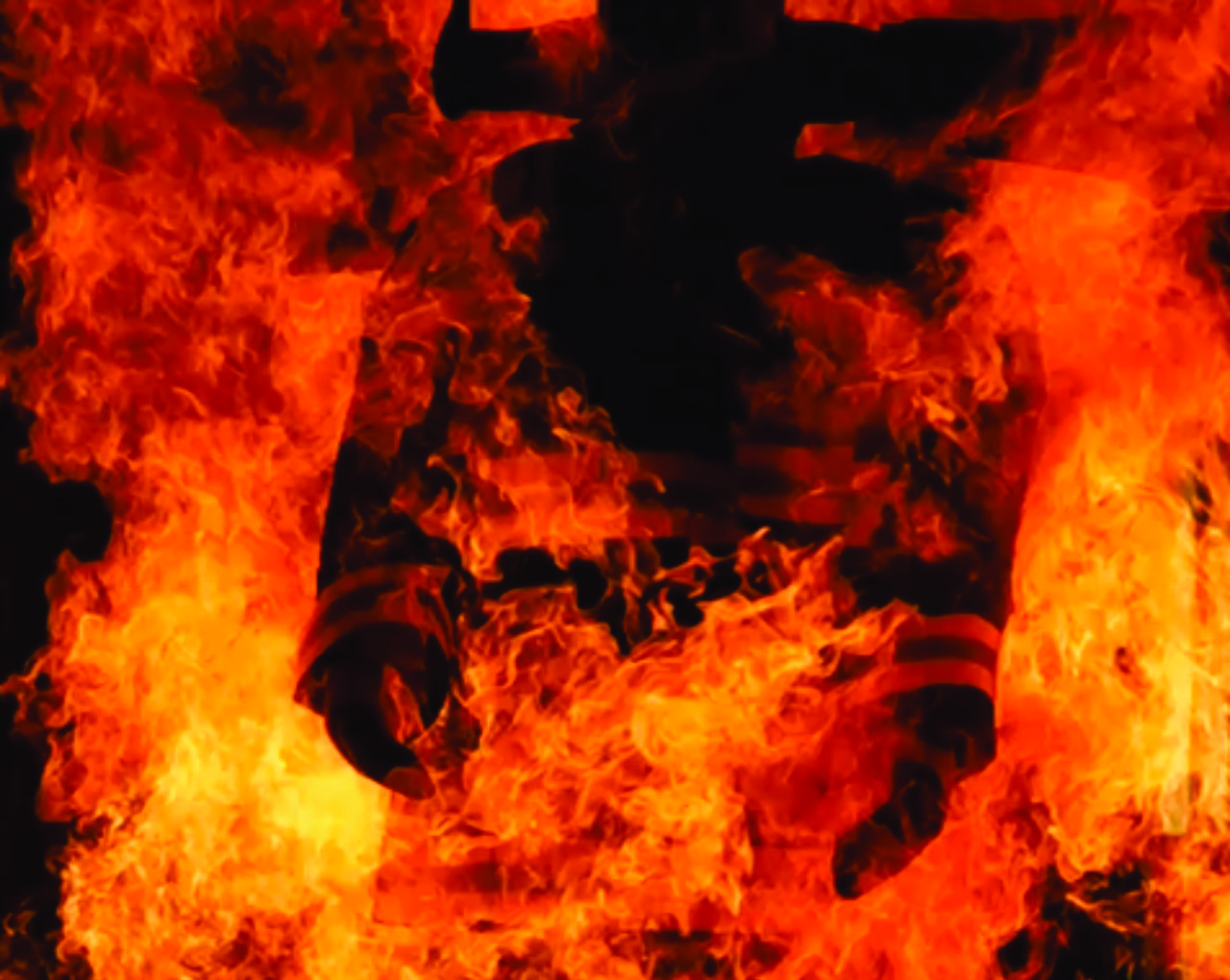
Fire Doesn’t Wait: What PyroMan Testing Reveals About Reflective Trim Under Extreme Heat
Fire service environments demand validation beyond minimum requirements. For organizations developing, specifying, or evaluating firefighter PPE, engaging early with advanced testing helps
5 Reasons Reflective Trim Fails Safety Tests: A Diagnostic Guide
Understanding why reflective trim fails, how failures present, and what warning signs to look for can help reduce uncertainty and protect workers